June 9, 2025
20:00
Atelier 363,
Progr Zentrum,
Bern.
Eintritt frei/Kollekte
June 10, 2025
20:00
OHHO,
Biel/Bienne
Eintritt frei/Kollekte
June 11, 2025
17:00
Johanneskirche,
Strengelbach
Eintritt frei/Kollekte
June 16, 2025
20:30
H95, Basel
Eintritt frei/Kollekte
June 17, 2025
17:00
Fronwagplatz,
(Schaffhauser Kulturtage),
Schaffhausen
World music fusion blends heritage melodies, regional rhythms and modern technology to create music that resonates across cultures. This universe places traditional instruments and vocal practices into contexts driven by synthesizers, electronic beats and experimental sound design, producing works that are both rooted and forward-looking.
Cross-cultural musical exchange dates back centuries: the Silk Road carried Persian maqam and Central Asian modes into Anatolia, while the Atlantic trade routes shaped Afro-Caribbean rhythms. In the 20th century, recordings and radio accelerated hybrid forms. Afrobeat arose in the 1960s when Fela Kuti merged highlife, jazz and funk. In the 1990s and 2000s, artists like Nusrat Fateh Ali Khan collaborated with Western producers to popularize Qawwali in electronic contexts. Key hybrid genres include Afrobeat, Indo-jazz, electro-cumbia, Balkan brass fused with electronica, and ambient interpretations of ancient modes. Traditional instruments often reappear in these hybrids: tabla and sitar from South Asia; oud, kanun and darbuka from the Middle East; kora and balafon from West Africa; tres and charango from Latin America; shakuhachi and guzheng in East Asian fusions; and fiddles and bouzouki in European Celtic blends. These instruments carry distinct tuning systems, microtonal intervals and rhythmic vocabularies that enrich synthesis-based arrangements when treated with sensitivity.

Electronic textures transform acoustic timbres through synthesis, processing and arrangement. Common approaches include layering sampled acoustic phrases with analog or virtual synthesizers, using granular synthesis to stretch vocal ornamentation, and applying spectral processing to emphasize microtones. Producers often rely on Ableton Live for live sets and experimental arrangement, Logic Pro for detailed mixing and Pro Tools for mix finalization. Field recording plays a crucial role: handheld recorders such as the Zoom H4n and Sony PCM series capture performances, environmental ambiences and percussive hits that become raw material for samplers like Native Instruments Kontakt or Akai MPC hardware. Beat-making techniques borrow from hip hop and electronic dance music, employing swing grids, polyrhythms and tempo-mapped samples to preserve the feel of traditional meters such as tala or West African bell patterns. Legal clearance for sampled material requires negotiation of both composition and master rights; collection societies such as ASCAP, PRS and SACEM handle performance royalties while mechanical and synchronization licenses are negotiated per territory.
Recommended technical tools and techniques commonly used:
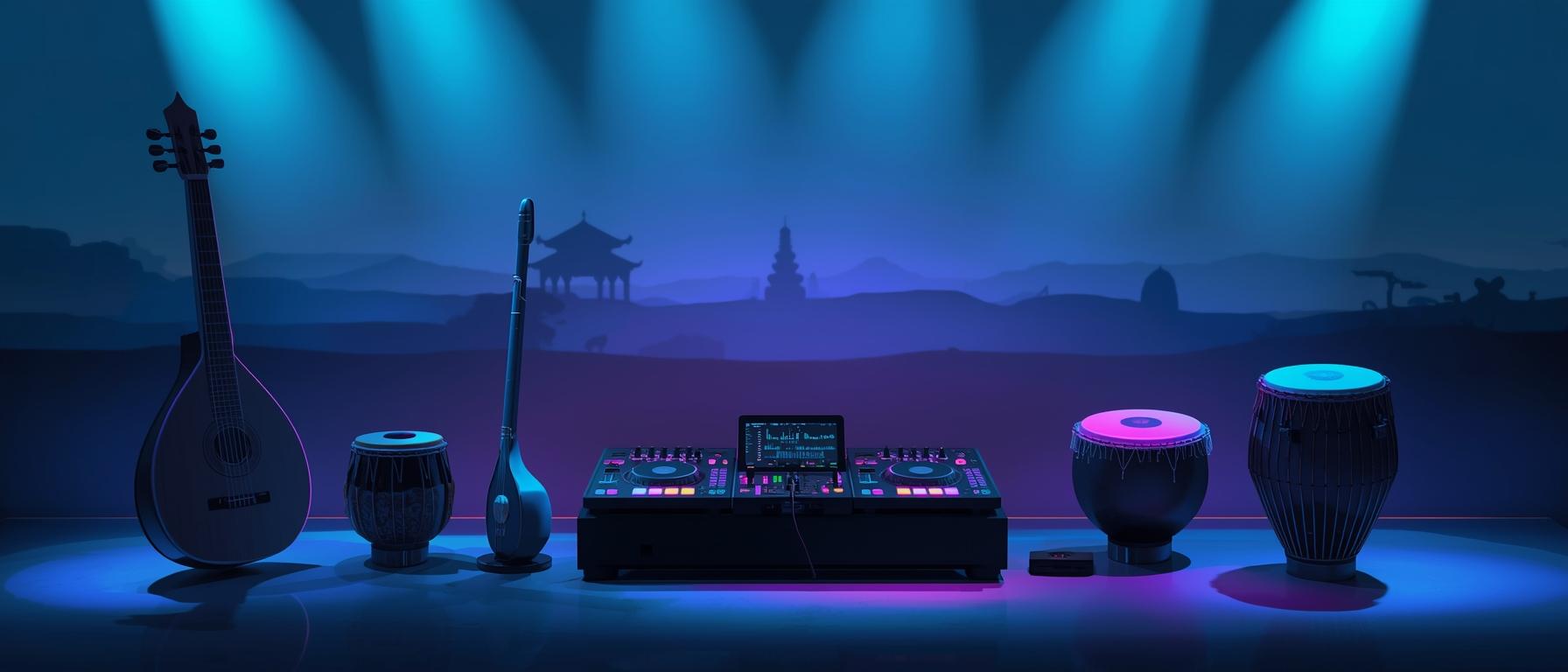
Pioneering and contemporary artists have defined and expanded fusion vocabulary. The following overview highlights representative acts, signature instruments and landmark recordings that illustrate regional trajectories.
| Region | Representative artists | Signature instruments | Notable recordings / years |
|---|---|---|---|
| South Asia | Anoushka Shankar; Nitin Sawhney; Talvin Singh | Sitar; tabla; electronic tabla | Anoushka Shankar — "Traveller" (2011); Nitin Sawhney — "Beyond Skin" (1999) |
| Middle East & North Africa | Natacha Atlas; Omar Souleyman; Hossam Ramzy | Oud; darbuka; nay | Natacha Atlas — "Diaspora" (1995); Omar Souleyman — collaborations with Four Tet (2013) |
| West Africa & Afro-diasporic | Fela Kuti; Tinariwen; Youssou N'Dour | Electric guitar; kora; talking drum | Fela Kuti — "Expensive Shit" (1975); Tinariwen — "Amassakoul" (2004) |
| Latin America & Caribbean | Bomba Estéreo; Buena Vista Social Club; Calle 13 | Tres; bongos; charango | Buena Vista Social Club — album (1997); Bomba Estéreo — "Amanecer" (2015) |
| East & Southeast Asia | Ryuichi Sakamoto; Jambinai; Sa Dingding | Gayageum; shamisen; guzheng | Jambinai — "Shim" (2012); Sakamoto — "Async" (2017) |
| Europe & Celtic | Afro Celt Sound System; Loreena McKennitt | Uilleann pipes; bouzouki; fiddle | Afro Celt Sound System — "Volume 1" (1996) |
This overview spotlights how cross-pollination occurs: South Asian classical phrasing placed against drum-and-bass breakbeats; Saharan guitar traditions looped into dub textures; Andean panpipes sampled within downtempo downtempo frameworks. Contemporary innovators such as Bonobo, Four Tet and Thievery Corporation serve as producers who bridge club-ready structure with ethnographic source material.
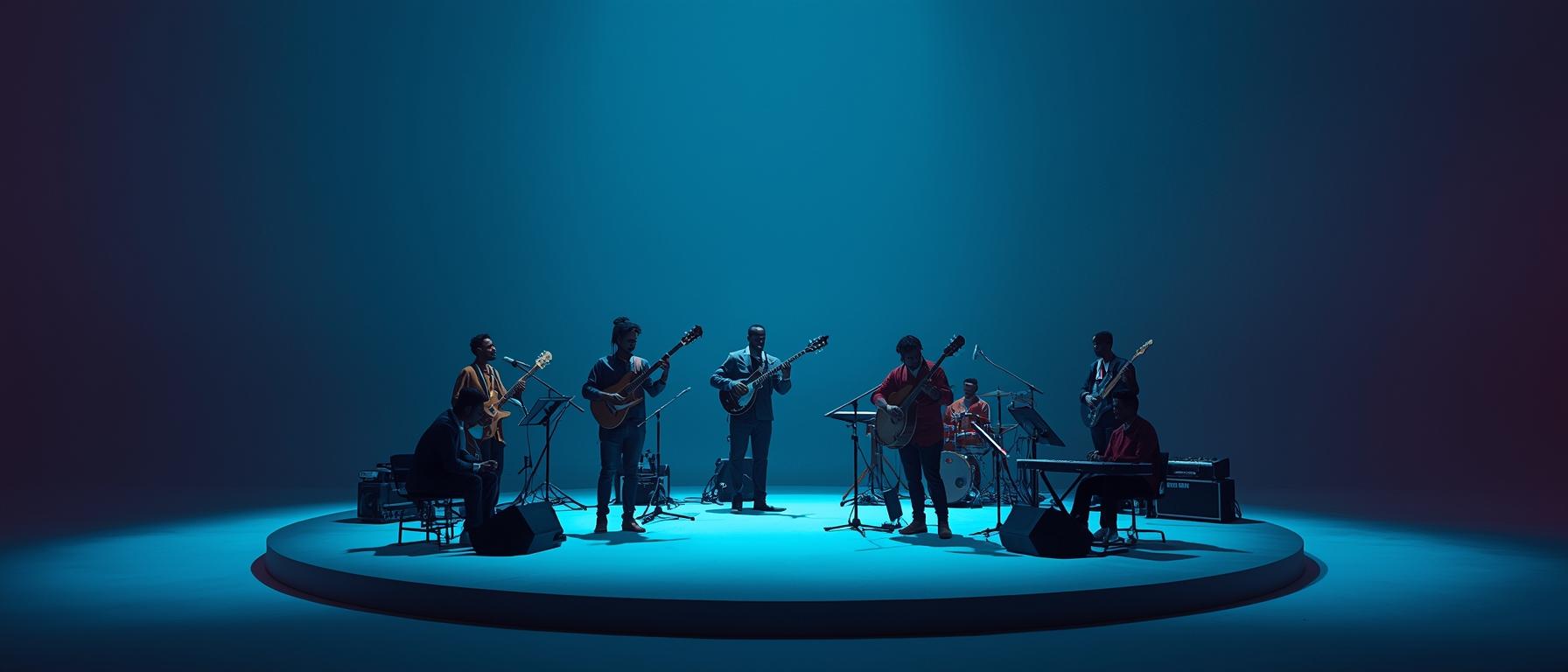
Live practice in fusion contexts demands hybrid skill sets. Musicians combine acoustic virtuosity with controllers, clocked sequences and real-time effects. Festival circuits like WOMAD, Roskilde and WOMEX program fusion acts, providing marketplaces and artist residencies. Visuals and immersive staging increasingly accompany sets: mapped projections, spatial audio and responsive lighting enhance modal and rhythmic journeys. Vocal work frequently preserves original languages and oral traditions; artists must balance intelligibility with sonic treatment to honor lyric content.
Ethical practice requires transparent collaboration, fair crediting and equitable revenue sharing. Appropriation concerns have legal and moral facets. Proper licensing protects original creators; publishers and record labels must secure mechanical and sync licenses when repurposing field recordings or arranging traditional repertoire. Performance royalties differ by territory; registering works with local societies ensures collection of airplay and streaming income.
Discovery and support mechanisms include curated playlists on streaming platforms, community radio shows, niche labels such as World Circuit and Glitterbeat, and grassroots patronage via crowdfunding and bandcamp sales. Educational pathways blend conservatory training in ethnomusicology with electronic music programs and internships in sound design. Aspiring creators gain from mentorships, fieldwork in source communities and hands-on studio practice.
Almwaya situates itself in this continuum by pairing global melodic threads with experimental electronic production. The project emphasizes respectful collaboration, field-captured motifs and synthesized textures to craft immersive narratives that invite listeners to traverse cultural tunnels while maintaining provenance and shared authorship.
Support for emerging fusion acts increases when audiences attend live shows, purchase recorded works directly, and follow artist channels that disclose credits and sample sources. Investing time in curated programming and ethical licensing strengthens the ecosystem that sustains both tradition bearers and electronic innovators.


